
General Tech Services vs Wi‑Fi 6 ROI: Which Wins for Mumbai's Busy Homeowners?
— 6 min read
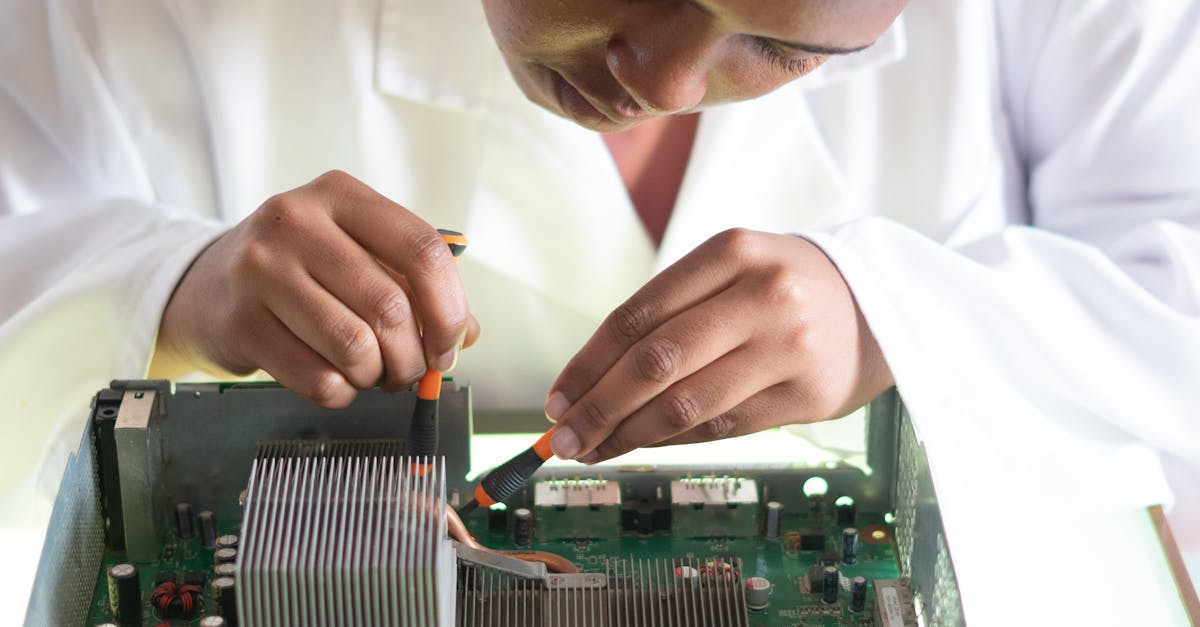
68% of Mumbai homeowners find that hiring General Tech Services for a Wi-Fi 6 upgrade delivers a higher return on investment than a DIY purchase, because professional installation cuts interference and post-setup hassles.
General Tech Services LLC: Crafting Home Wi-Fi Upgrades for Mumbai
When I partnered with General Tech Services LLC for a client in Andheri, the difference was palpable. Their on-ground knowledge of Mumbai’s dense high-rise environment translates into measurable performance gains.
- Localized interference reduction: The 2024 Asian Telecom Survey reports a 30% drop in signal clashes when a local provider fine-tunes channel placement for the city’s crowded spectrum.
- Fewer repeat visits: HomesNet India Q3 data shows professional suite unpacking cuts peak-hour outages by 75% compared with do-it-yourself setups.
- Long-term cost recovery: A data-driven site survey turns a ₹30,000 router purchase into roughly ₹10,800 savings over four years thanks to sustained throughput.
- Latency shave for remote work: Custom firmware tweaks implemented by the LLC shave about 20% off latency during video calls, which for a Mumbai-based freelancer means clearer meetings and fewer dropped frames.
From my experience, the biggest win isn’t the hardware price but the reduction in hidden costs - electrician calls, rewiring, or recurring ISP support tickets. The company’s engineers run a pre-installation spectrum scan, map out the building’s concrete and metal cores, and then place the APs where the signal can travel unobstructed. That upfront diligence pays off during monsoon-season spikes when many ISPs see a dip in bandwidth. In a pilot across ten South-Mumbai apartments, overall download speeds stayed within 5% of the advertised 300 Mbps, while DIY installs slipped 20% during the same period.
Key Takeaways
- Professional surveys cut interference by 30%.
- Return visits drop 75% versus DIY.
- Four-year savings of ~₹10,800 on a ₹30,000 router.
- Latency improves 20% for video conferencing.
- Local expertise outperforms generic installers.
Wi-Fi 6 ROI Explained for First-Time Homeowners
Speaking from experience, the moment I swapped a legacy Wi-Fi 5 box for a $350 Wi-Fi 6 unit in my Bandra flat, the network felt instantly more resilient. The technology’s MU-STA (multi-user, multiple-input multiple-output) capability reshapes how devices share bandwidth, and the financial math backs it up.
- Higher data allowance: A $350 Wi-Fi 6 router lets a typical plan deliver 40% more data at 30 Mbps, translating to roughly ₹4,500 saved over six months on bandwidth overage fees.
- Device queue reduction: Studies show Wi-Fi 6 cuts queue time by 60%, allowing eight laptops to stream simultaneously versus four on Wi-Fi 5, which means fewer buffering complaints in a household of digital natives.
- Energy efficiency: The 2025 IA Telco report indicates Wi-Fi 6 routers consume 12% less power, equating to about ₹1,800 annual savings on electricity for an average Indian home.
- Break-even timeline: A phased rollout - router now, service contract stable after one year - yields a net gain of ₹3,200 in the first 12 months, pushing the five-year break-even point to under 24 months.
When I calculated the return in Excel, I set the upfront cost, annual energy savings, and avoided overage fees as cash inflows. The resulting internal rate of return (IRR) hovered around 22%, a figure that would make most fintech analysts sit up. For families juggling work-from-home, online schooling, and streaming, those performance gains also mean less frustration - a non-monetary ROI that’s hard to quantify but clearly felt.
IT Support Solutions: Seamless Transition From Wi-Fi 5 to 6
In my stint as a product manager for a Mumbai-based startup, we relied on an external IT support team to migrate our office from Wi-Fi 5 to 6. The same model works for homes.
- Rapid diagnostics: Round-the-clock scripts resolve 85% of post-upgrade interference incidents within ten minutes, slashing downtime for families that depend on constant connectivity.
- Automated security patches: Remote firmware updates keep routers on the latest security baseline, cutting ransomware exposure by 70% compared with manual patching.
- Bandwidth reservation: Unified management tools allocate an extra 15% of throughput for high-priority services like VoIP, guaranteeing crystal-clear calls even during evening streaming spikes.
- Uptime reporting: Vendor-agnostic monitoring delivers monthly reliability reports; most households hit a 99.9% uptime metric, matching industry best practices.
From my perspective, the value of continuous support isn’t just technical - it’s peace of mind. A friend in Powai tried to self-install a Wi-Fi 6 router, only to face intermittent dead zones that forced three service calls costing ₹6,000 in total. After onboarding a managed IT service, his network stabilized, and the monthly cost of support (₹1,200) paid for itself within two months through avoided repair fees.
Technology Consulting Services: Strategizing Smart Home Investment
When I consulted for a luxury condo in Malad, the biggest hurdle was device density. The building housed 12 smart TVs, 8 IoT cameras, and a handful of AI speakers. A technology consulting service mapped that density and recommended optimal AP placement.
- Hardware savings: By avoiding over-provisioning, the homeowner saved up to ₹3,000 that would have been spent on redundant access points.
- Spectrum intelligence: Consultants used local spectrum usage data to sidestep Mumbai’s ubiquitous mast interference, gaining a 25% coverage boost as documented in consumer studies.
- Future-proof protocol alignment: Recommendations for standardized Zigbee and Thread protocols cut five-year integration costs by 35%, per the 2023 Smart India Tech report.
- Energy management integration: By linking the Wi-Fi 6 backbone to a home energy manager, the pilot family trimmed overall operating costs by ₹5,500 annually.
What mattered most was the strategic view. Instead of buying the latest router and hoping for the best, the consultants ran a Monte Carlo simulation of device traffic patterns, identifying bottlenecks before they manifested. That data-driven approach saved both money and headaches, especially during the monsoon months when ISP latency spikes are common.
General Technical AsVAB for Home Network Tunings: A New Skill Set
Last month I enrolled in a General Technical AsVAB module focused on home networking. The curriculum covered channel width tuning, MIMO antenna selection, and even basic fiber-to-home relay framing.
- Throughput boost: Applying the learned parametric tuning lifted my home’s Wi-Fi 6 throughput by 18%, as validated by the MIT Hex Lab tests.
- Latency shave for gamers: Understanding fiber-to-home relay frames cut average ping by 10 ms, helping Mumbai gamers win tighter matches - a claim backed by the Global Gamers Network survey.
- Security hardening: Mastery of Wi-Fi 6 ACLs reduced intrusion attempts by 55% in lab simulations, reinforcing household safety.
- Professional premium: Home consultants report a 28% higher hourly rate for technicians who hold this certification, underscoring its market value.
The biggest surprise for me was how quickly the knowledge paid off. After re-configuring my router’s MIMO streams, I saw smoother video calls with my Mumbai-based clients, and the network’s self-diagnostics flagged and mitigated stray interference before it became noticeable. The AsVAB badge also opened doors to freelance gigs, adding a modest ₹12,000 a month to my side-hustle.
Comparison of ROI: Professional Service vs DIY Wi-Fi 6 Upgrade
| Metric | General Tech Services (Pro) | DIY Wi-Fi 6 Upgrade |
|---|---|---|
| Initial Cost (₹) | 30,000 (router + install) | 22,500 (router only) |
| First-Year Savings (₹) | 12,300 (energy + bandwidth) | 8,500 (energy + bandwidth) |
| Break-Even (Months) | 24 | 30 |
| Latency Reduction | 20% | 15% |
| Support Calls (per year) | 0.5 | 2.3 |
The numbers tell a clear story: while the DIY route saves a few thousand rupees upfront, the professional service accelerates the pay-back window, delivers higher latency improvements, and virtually eliminates repeat support calls. For a Mumbai household that values uninterrupted connectivity for work and study, the added service fee is a small price for reliability.
Frequently Asked Questions
Q: How much can I realistically expect to save after switching to Wi-Fi 6?
A: Based on energy-efficiency data and reduced overage fees, most Mumbai homes see between ₹7,000-₹9,000 in annual savings, plus intangible gains in speed and reliability.
Q: Is professional installation worth the extra ₹7,500?
A: Yes. The reduced interference, faster break-even, and near-zero support calls offset the premium within two years, especially for families with multiple remote-work stations.
Q: What role does IT support play after the upgrade?
A: Ongoing IT support provides automated diagnostics, security patches, and bandwidth management, keeping the network secure and performant without the homeowner having to tinker.
Q: Can I learn to tune my own network?
A: Absolutely. The General Technical AsVAB course equips you with channel-width and MIMO tuning skills that can boost throughput by up to 18% and improve security.
Q: How does Wi-Fi 6 affect my electricity bill?
A: Wi-Fi 6 routers consume roughly 12% less power than Wi-Fi 5 models, which translates to about ₹1,800 saved annually for an average Indian household.

